
The most common low testosterone symptoms in men are persistent fatigue, dropping sex drive, mood shifts, difficulty building muscle, brain fog, and broken sleep, arriving slowly, quietly, and usually all at once.
Most men don’t connect the dots. They blame work stress, age, bad weeks that stretch into bad months. And sometimes that’s all it is. But sometimes there’s something more specific happening, a hormonal decline that’s reshaping how they feel without ever announcing itself.
Testosterone isn’t just a gym thing. It’s the engine underneath energy, confidence, focus, drive, and intimate health. When it drops, everything runs a little worse. Here are 12 low testosterone symptoms worth knowing, and what to actually do about them.
12 Low Testosterone Symptoms to Watch For
1. Fatigue That Sleep Doesn’t Fix

Not regular tired. The kind that’s still there after eight hours. A heaviness that doesn’t lift. Testosterone plays a direct role in how efficiently your body produces and uses energy, so when it drops, everything runs at a lower wattage. Men often describe it as feeling like they’re constantly operating at 70%.
2. A Sex Drive That’s Gone Quiet
Not absent necessarily. Just dimmer than it used to be. A slow fade that’s easy to dismiss until someone asks when the last time was that you actually wanted something. Low libido is one of the earliest and most consistent signs of testosterone deficiency in men, and one of the most overlooked because it arrives gradually.
3. Erections That Aren’t What They Were
Testosterone supports both the desire and the mechanism. When levels drop, men notice weaker erections, less reliable timing, less intensity. It’s one of the low testosterone symptoms men are most reluctant to name, which is exactly why so many go years without addressing it.
4. Mood Swings, Irritability, That Flat Feeling
Testosterone directly influences dopamine and serotonin. Low T doesn’t just affect the body, it changes your emotional baseline. Irritability without clear cause. Low motivation. A mild flatness that isn’t quite depression but isn’t right either. It’s hormonal, not just psychological. That distinction matters.
5. The Gym Stops Paying Back
You’re still training. Still putting in the work. But muscle is harder to build and easier to lose. Testosterone is the primary anabolic hormone in men, without adequate levels, the body doesn’t respond to training the way it should. If effort and results feel disconnected, this is worth checking.
6. Fat Accumulating in New Places
Belly and chest, specifically. As testosterone drops, the body shifts toward fat storage, and fat tissue converts testosterone into estrogen, which accelerates the whole cycle. Some men develop gynecomastia (breast tissue growth). That one tends to get their attention.
7. Brain Fog, The Thinking Is Slower
Forgetting things mid-sentence. Losing the sharp edge that used to come naturally. Testosterone supports cognitive function, and when it dips, focus goes with it. Men notice it most in high-demand work situations where they used to be quick and now feel like they’re wading through mud.
8. Sleep That’s Light and Broken
Poor sleep and low testosterone feed each other. Research published on PubMed confirms that low T disrupts deep sleep, and poor deep sleep further suppresses testosterone production. It’s a loop. And it’s hard to break without addressing both ends.
9. Joints That Ache a Little More Than Before
Testosterone helps maintain bone mineral density. When it’s low, joints get stiff, recovery from physical activity slows, and there’s a low-grade ache that men usually attribute to age. Sometimes it is age. Sometimes it’s signs of low T in men that are just being mislabelled.
10. Body Hair and Facial Hair Thinning
Testosterone controls hair growth patterns in men. A noticeably slower beard, thinning body hair, these are quiet signals that often come alongside other low testosterone symptoms rather than appearing alone. Easy to ignore. Not irrelevant.
11. Confidence and Drive That Have Gone Somewhere
The ambition to pursue things. The social ease. That sense of being settled in yourself. It sounds abstract but men who’ve experienced this know exactly what’s missing. Testosterone doesn’t just run the body, it runs the inner sense of direction. When it drops, things that used to matter just sort of… don’t.
12. Reduced Semen Volume
Less obvious than the others and less talked about. But testosterone is central to sperm production and ejaculatory function. A noticeable change here, especially alongside other symptoms, is male hormone decline signalling clearly. For men thinking about starting or growing a family, it’s worth taking seriously.
Four or more of these, consistently, over weeks? That’s a pattern. Not a phase.
What’s Actually Causing This
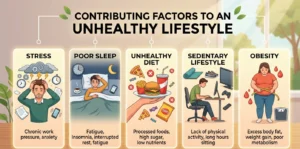
Low testosterone symptoms don’t appear in a vacuum. Something is driving them. In most Indian men today, it’s usually one or more of these:
Chronic stress
Chronic stress is the biggest one. Cortisol and testosterone have a direct seesaw relationship, when cortisol stays elevated, the body deprioritises testosterone production. Modern work life, financial pressure, always-on culture, all of it keeps cortisol high.
Sleep debt
Sleep debt is second. Most testosterone is produced during deep sleep. Under six hours consistently? Every system that depends on testosterone underperforms. It’s not subtle.
Sedentary lifestyle
Sedentary lifestyle accelerates the natural decline significantly. The body produces testosterone partly in response to physical demand. No demand, less production.
Nutritional gaps
Zinc, Vitamin D, magnesium deficiencies are directly tied to low T causes in men. These are among the most common gaps in the urban Indian male diet. Quietly doing damage for years.
Excess body fat
Excess body fat converts testosterone into estrogen through adipose tissue. More fat, less testosterone, more fat. The loop continues until something interrupts it.
How to Fix Low Testosterone Naturally
The honest answer: most cases of low testosterone, especially in men under 45, respond well to consistent lifestyle changes. Not fast. But real.
Diet is the foundation. Eggs, fatty fish, pumpkin seeds, ashwagandha, garlic, dark leafy greens, these aren’t superfoods for social media. They address the actual nutritional gaps driving low testosterone symptoms in most men. Eat them consistently, not occasionally.
Resistance training 3–4 times a week is non-negotiable. Heavy compound movements, squats, deadlifts, rows, specifically stimulate testosterone production in a way that cardio alone doesn’t.
Sleep has to be protected. Seven to nine hours of actual sleep, not just time in bed. Fix the phone habits, the late-night scrolling, the bedroom temperature. It sounds basic because it is, and it works.
Cortisol management matters as much as anything else. Daily walks, proper rest between work sessions, not checking emails at midnight, these aren’t wellness clichés. This is how you lower the hormone that’s actively suppressing testosterone.
Give it 8 weeks. Theek se jeena padta hai, natural testosterone recovery isn’t a sprint.
When Lifestyle Needs Support
For men over 35, or those where the gap between current levels and how they want to feel is significant, Ayurvedic treatment for low testosterone can fill what lifestyle changes alone don’t fully close.
Shilajit and ashwagandha are the two most research-backed options. Shilajit directly supports testosterone production and cellular energy. Ashwagandha targets cortisol, knocking down the hormone that’s been suppressing T in the first place. Together, they cover both sides of the equation.
Nature Mania’s formulations are built around exactly this, honest, lab-tested, Ayurvedic support for the systems that drive male vitality. Not overnight results. Steady ones. The kind that stick.
Conclusion
Low testosterone symptoms don’t arrive loudly. They accumulate, slowly reshaping energy, mood, performance, confidence, until something finally feels off enough to pay attention to.
If several things on this list resonated, start with the basics. Sleep. Food. Movement. Stress. Those four, taken seriously over 8 weeks, shift more than most men expect.
And if you need a little extra support, there’s a reason Ayurveda has been putting men back together for thousands of years. Koi acchi cheez time leti hai. But it works.
Try Nature Mania’s Shilajit Capsules
For men looking to support testosterone naturally, Nature Mania’s Shilajit Capsules are formulated with pure, lab-tested Shilajit resin, clinically studied for improving testosterone levels, energy, and stamina in men. Recommended by Dr. Neha Mehta, India’s Top Intimacy Expert. No harsh chemicals. COD available.
Frequently Asked Questions
Q1: At what age does testosterone start declining in men?
Testosterone begins declining gradually around age 30 at roughly 1% per year. But lifestyle factors, poor sleep, chronic stress, sedentary habits, can push this earlier, with some men in their mid-twenties already experiencing noticeable low testosterone symptoms.
Q2: Can low testosterone improve without medication?
In many cases, yes, especially in younger men where lifestyle is the primary driver. Consistent sleep, resistance training, a zinc-rich diet, and active cortisol management over 8–12 weeks often produce meaningful improvements without any pharmaceutical intervention.
Q3: How is low testosterone diagnosed?
A morning blood test measuring total and free testosterone is standard. Levels below 300 ng/dL are generally considered low, though symptoms matter alongside numbers. Always test in the morning when levels are at their daily peak for an accurate reading.
Q4: Can stress alone cause low testosterone symptoms?
Yes. Sustained high cortisol directly suppresses testosterone production, the two hormones compete. Men under prolonged work, financial, or relational stress regularly show signs of low T in men even without any other underlying cause.
Q5: Is low testosterone common in Indian men?
More common than most realise. Desk jobs, poor sleep, nutritional deficiencies, and chronic stress make urban Indian men increasingly susceptible to male hormone decline at earlier ages than previous generations experienced.
Q6: Are Ayurvedic supplements effective for low testosterone?
Research supports ashwagandha and Shilajit specifically, both show meaningful testosterone improvements in clinical studies. They work best as part of a broader lifestyle approach and are generally safe for long-term daily use in recommended doses.