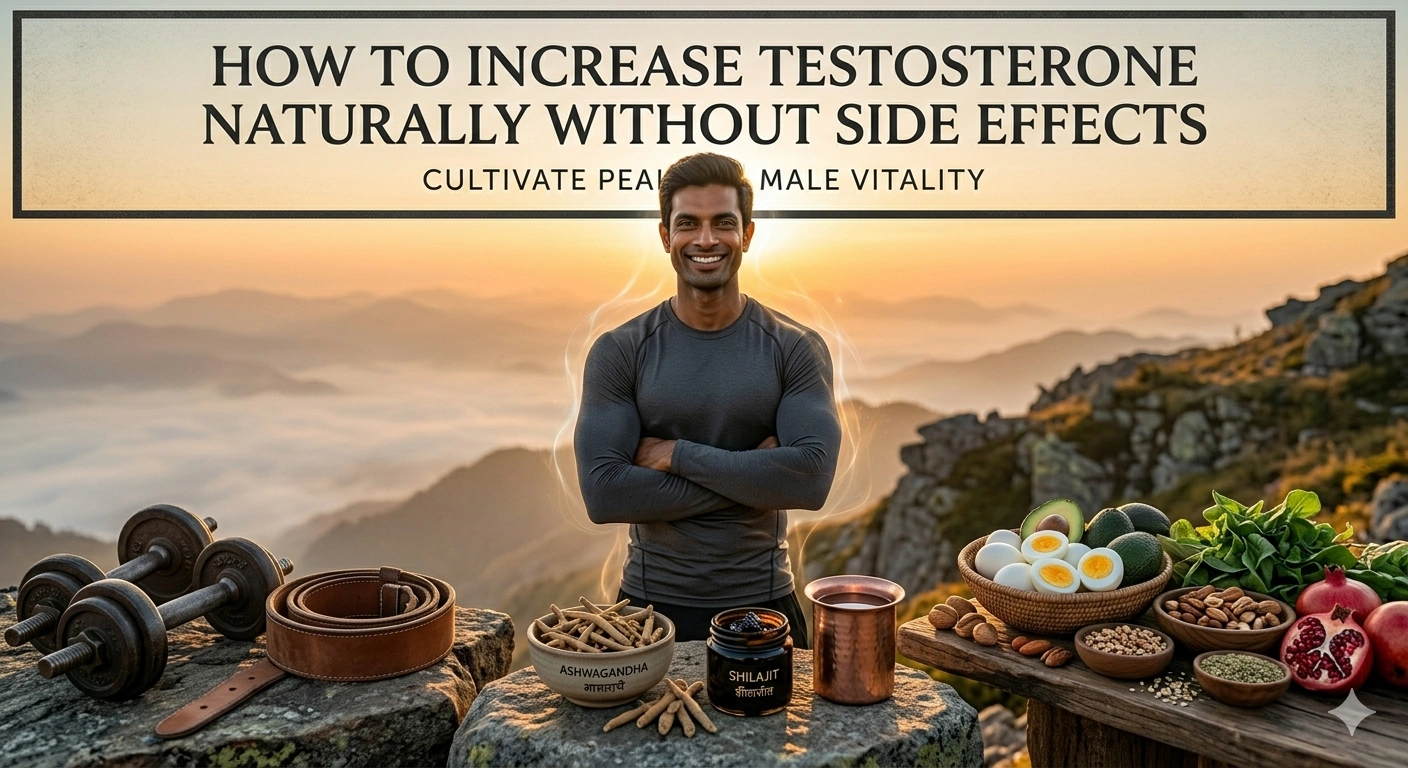
Testosterone. It’s the hormone most associated with masculinity — but it’s so much more than that. Testosterone governs your energy levels, muscle mass, bone density, mood, focus, libido, and even your ability to handle stress. When it’s optimal, you feel sharp, strong, and alive. When it dips, everything — from your drive at the gym to your desire in the bedroom — can feel like it’s running on empty.
The concerning reality is that testosterone levels in men have been declining globally over the past few decades. Stress, poor sleep, processed diets, sedentary lifestyles, and environmental toxins are all contributing factors. Many men in their 30s today have testosterone levels that previous generations didn’t see until their 50s, which is why more men are searching for how to increase testosterone naturally.
The instinctive response for many is to look at testosterone replacement therapy (TRT) or synthetic boosters. But these come with real risks — hormonal dependency, testicular shrinkage, fertility issues, cardiovascular stress, and more. The far smarter, safer path is to work with your body’s natural mechanisms. And the good news? It works — often better than men expect.
Here’s your complete guide to increasing testosterone naturally, without side effects, and without compromising your long-term health.
Why Does Testosterone Decline?

Before fixing the problem — and understanding the most effective ways to increase testosterone without side effects — it helps to understand what’s causing it. Testosterone decline in men is driven by a combination of:
- Age — Testosterone naturally declines about 1–2% per year after age 30
- Chronic stress — Elevated cortisol directly suppresses testosterone production
- Poor sleep — Most testosterone is produced during deep sleep; poor sleep = low T
- Excess body fat — Fat cells convert testosterone into oestrogen through a process called aromatisation
- Sedentary lifestyle — Lack of physical activity reduces the hormonal signals that stimulate testosterone production
- Poor nutrition — Deficiencies in zinc, magnesium, vitamin D, and healthy fats starve the body of the raw materials needed to make testosterone
- Alcohol and smoking — Both are well-documented testosterone suppressants
- Environmental toxins — Plastics, pesticides, and certain chemicals mimic oestrogen in the body (endocrine disruptors)
For a detailed breakdown of what to eat and avoid, this guide on foods for male sexual health covers the nutritional side of male hormonal health thoroughly.
1. Lift Heavy Weights — Especially Compound Movements

Resistance training is one of the most reliable, well-researched natural testosterone boosters available and one of the best exercises to boost testosterone naturally for men exploring how to increase testosterone naturally. When you perform heavy compound movements — squats, deadlifts, bench press, overhead press, rows — your body responds by increasing testosterone and growth hormone production.
The key is intensity. Light, high-rep workouts have a modest effect. Heavy, low-rep training (4–6 reps at 80–90% of your maximum) produces the most significant hormonal response.
Practical approach:
- Train with weights 3–4 times per week
- Prioritise multi-joint compound exercises
- Keep rest periods moderate (60–90 seconds) to maintain hormonal stimulus
- Avoid chronic overtraining — excessive exercise without adequate recovery can actually raise cortisol and suppress testosterone
2. Prioritise Deep, Quality Sleep
This cannot be overstated. The majority of your daily testosterone is produced during sleep — specifically during the deep, slow-wave sleep cycles. A study published in the Journal of the American Medical Association found that men who slept only 5 hours a night for one week had testosterone levels 10–15% lower than when they were fully rested.
That’s a significant drop — and it happens in just one week of poor sleep.
Sleep optimisation tips:
- Aim for 7–9 hours every night, consistently
- Keep your bedroom cool (around 18–20°C is optimal)
- Avoid blue light from screens for at least 30–60 minutes before bed
- Maintain a consistent sleep and wake schedule, even on weekends
- Avoid alcohol close to bedtime — it disrupts sleep architecture even if it helps you fall asleep initially
3. Manage Cortisol — The Testosterone Killer
Cortisol and testosterone have an inverse relationship. When one goes up, the other tends to go down. Chronic stress keeps cortisol elevated around the clock, constantly suppressing testosterone production.
Modern life is full of cortisol-spiking triggers — work pressure, financial stress, relationship tension, information overload, social media. The body can’t distinguish between a work deadline and a predator — it responds to both with the same stress hormone cascade.
Natural cortisol management:
- Daily meditation or mindfulness practice (even 10 minutes makes a measurable difference)
- Deep diaphragmatic breathing exercises
- Regular time in nature
- Reducing caffeine intake, especially in the afternoon
- Setting clear work-life boundaries
- Physical exercise (paradoxically, exercise raises cortisol briefly but reduces chronic baseline cortisol over time)
4. Eat for Testosterone Production
Your diet provides the literal raw materials for testosterone synthesis, which is why choosing the best foods to increase testosterone naturally is so important. Get the nutrition wrong and no amount of exercise or sleep will fully compensate.
Testosterone-supporting nutrients:
- Zinc — Perhaps the single most important mineral for testosterone. Found in oysters, red meat, pumpkin seeds, and legumes. Zinc deficiency directly causes low testosterone.
- Vitamin D — Functions more like a hormone than a vitamin in the body. Low vitamin D is strongly correlated with low testosterone. Get sunlight daily and consider supplementation, especially in winter.
- Healthy fats — Testosterone is synthesised from cholesterol. Diets too low in fat consistently produce lower testosterone. Include avocados, olive oil, nuts, eggs, and fatty fish.
- Magnesium — Supports free testosterone levels by reducing the binding of testosterone to SHBG (sex hormone binding globulin). Found in leafy greens, nuts, seeds, and dark chocolate.
Foods to reduce or avoid:
- Processed foods and refined carbohydrates
- Excessive alcohol — even moderate drinking has been shown to reduce testosterone
- Soy products in large quantities (contain phytoestrogens)
- Foods in plastic containers heated in a microwave (leaches endocrine-disrupting chemicals)
5. Lose Excess Body Fat — Especially Belly Fat
Adipose tissue (body fat), particularly visceral fat around the abdomen, contains an enzyme called aromatase that converts testosterone into oestrogen. The more belly fat you carry, the more testosterone gets converted — creating a vicious cycle where low testosterone leads to more fat, which leads to even lower testosterone.
Breaking this cycle through diet, resistance training, and cardiovascular exercise is one of the most impactful things an overweight man can do for his testosterone levels. Even a 10% reduction in body weight can produce meaningful hormonal improvements.
6. Ayurvedic Herbs That Naturally Boost Testosterone
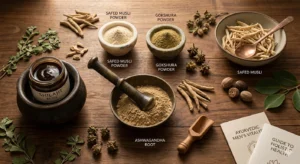
Ayurveda has a sophisticated pharmacopoeia of Ayurvedic herbs for testosterone and male vitality, specifically used to strengthen male hormonal health and support men searching for how to increase testosterone naturally. These aren’t folklore — many have now been validated by modern research.
Ashwagandha (Withania Somnifera) The most well-researched Ayurvedic herb for testosterone. Multiple clinical trials have shown it significantly increases total testosterone, free testosterone, and DHEAS in men. It works primarily by reducing cortisol — removing the hormonal brake on testosterone production.
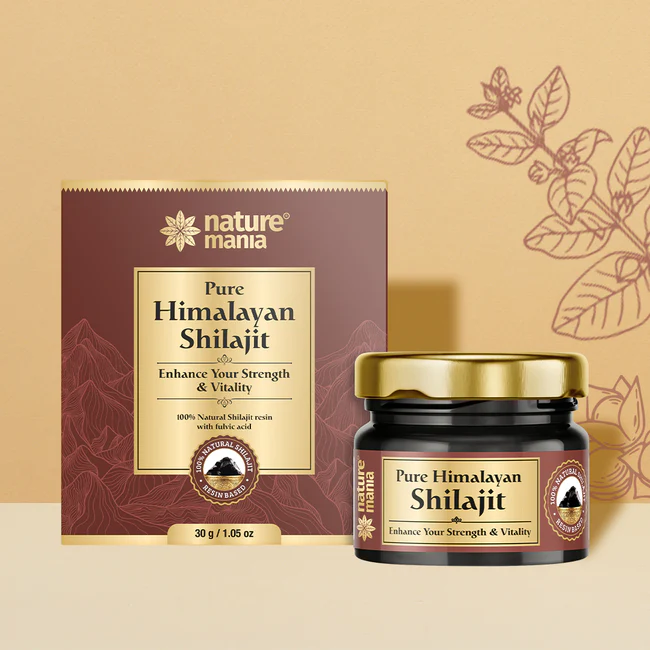
Shilajit Rich in fulvic acid and trace minerals, Shilajit supports testosterone at the cellular level by improving mitochondrial function and providing the micronutrients needed for hormone synthesis. Research has shown it can increase testosterone levels by up to 20% with consistent use.
Gokshura (Tribulus Terrestris) A traditional herb used to support luteinising hormone (LH) — the pituitary signal that tells the testes to produce testosterone. It also supports libido and overall reproductive health.
Safed Musli Strengthens Shukra dhatu (reproductive tissue) and supports testosterone and sperm production. Often combined with Ashwagandha for a synergistic effect.
If you want to explore how Ayurveda approaches testosterone holistically, this detailed resource on boosting testosterone with Ayurveda is an excellent place to start — it covers both the herbal and lifestyle dimensions of the Ayurvedic approach.
7. Minimize Exposure to Endocrine Disruptors
This is one of the most underappreciated factors in testosterone decline. Endocrine-disrupting chemicals — found in plastics (BPA), pesticides, certain cosmetics, and household cleaning products — mimic oestrogen in the body and interfere with testosterone production.
Practical steps to reduce exposure:
- Use glass or stainless steel containers instead of plastic
- Choose organic produce where possible to reduce pesticide exposure
- Avoid heating food in plastic containers
- Use natural, fragrance-free personal care products
- Filter your drinking water
According to research reviewed by the Endocrine Society, endocrine-disrupting chemicals are now considered a significant contributor to declining testosterone levels in men globally — making this a very real and practical concern, not a theoretical one.
8. Healthy Sexual Activity and Intimacy
There’s a well-established bidirectional relationship between testosterone and sexual activity, which is an important part of understanding how to increase testosterone naturally. Testosterone drives libido — but healthy sexual activity and intimacy also support testosterone levels. Physical touch, emotional connection, and regular sexual activity all send positive hormonal signals.
Understanding your body’s natural energy rhythms can also help you get more from your intimate life. Exploring the differences between morning sex vs night sex and which is better for you can give you useful insight into how your testosterone cycle throughout the day affects desire, performance, and satisfaction.
9. Limit Alcohol and Avoid Recreational Drugs
Alcohol is a direct testosterone suppressant — even moderate, regular consumption has been shown to reduce testosterone levels. It does this through multiple mechanisms: it raises cortisol, it damages Leydig cells in the testes (which produce testosterone), and it disrupts sleep quality.
Recreational drugs — particularly anabolic steroids used recreationally — can cause permanent damage to the body’s natural testosterone production mechanism. The short-term gains are rarely worth the long-term hormonal consequences.
How Long Does It Take to See Results Naturally?
This is the most common question for men researching how to increase testosterone naturally — and the honest answer is: it depends on your starting point and consistency.
- Sleep and stress improvements — Noticeable changes in energy and mood within 1–2 weeks
- Exercise and dietary changes — Measurable hormonal improvements typically within 4–8 weeks
- Herbal supplementation — Most Ayurvedic herbs require 8–12 weeks of consistent use for significant, sustained results
- Body fat reduction — Hormonal benefits become noticeable as you lose meaningful amounts of fat, typically after 8–12 weeks of consistent effort
The natural path requires patience — but the results are sustainable, side-effect-free, and they improve your overall health, not just your testosterone number.
Building a Routine That Works
Increasing testosterone naturally — and understanding how to increase testosterone naturally in a sustainable way — is not about one magic pill or one perfect habit. It’s about stacking the right behaviours — sleep, training, nutrition, stress management, and the right herbal support — consistently over time.
in a sustainable way — is not about one magic pill or one perfect habit. It’s about stacking the right behaviours — sleep, training, nutrition, stress management, and the right herbal support — consistently over time.
If you’re looking for a well-formulated supplement to complement your natural testosterone-boosting efforts, Nature Mania’s Tes-Up Capsule is crafted with Ayurvedic ingredients known to support healthy testosterone levels and male vitality. It’s not a replacement for lifestyle changes — but as part of a committed, holistic routine, it can meaningfully accelerate your progress. Worth exploring if you’re serious about optimising your hormonal health the natural way.
FAQs: How to Increase Testosterone Naturally
Q1. At what age does testosterone start declining and should I be worried?
Testosterone begins declining gradually from around age 30 at roughly 1–2% per year. This is normal and not inherently alarming. However, poor lifestyle choices can accelerate this decline significantly. The good news is that natural interventions — sleep, exercise, diet, stress management — can meaningfully slow or even partially reverse this decline at any age.
Q2. How do I know if I have low testosterone?
Common symptoms include persistent fatigue, reduced libido, difficulty building or maintaining muscle, increased body fat (especially around the abdomen), mood changes (irritability, low motivation, mild depression), brain fog, and reduced morning erections. A blood test measuring total and free testosterone is the definitive way to confirm.
Q3. Are natural testosterone boosters as effective as TRT (Testosterone Replacement Therapy)
For men with clinically diagnosed hypogonadism (very low testosterone due to a medical condition), TRT may be medically necessary. For the vast majority of men experiencing lifestyle-related testosterone decline, natural methods are not only effective but preferable — they improve overall health, have no side effects, and don’t create hormonal dependency.
Q4. Does masturbation or pornography affect testosterone levels?
The research on masturbation and testosterone is mixed. However, excessive pornography use can dysregulate dopamine pathways and reduce motivation for real-world intimacy and physical activity — both of which support testosterone. Moderation is generally the sensible approach.
Q5. Can I combine multiple Ayurvedic herbs for better results?
Yes — many classical Ayurvedic formulations combine herbs like Ashwagandha, Shilajit, Gokshura, and Safed Musli for synergistic effects. Well-formulated supplements typically do this work for you. If combining herbs independently, consulting a qualified Ayurvedic practitioner ensures you’re using the right combinations and dosages for your specific constitution.