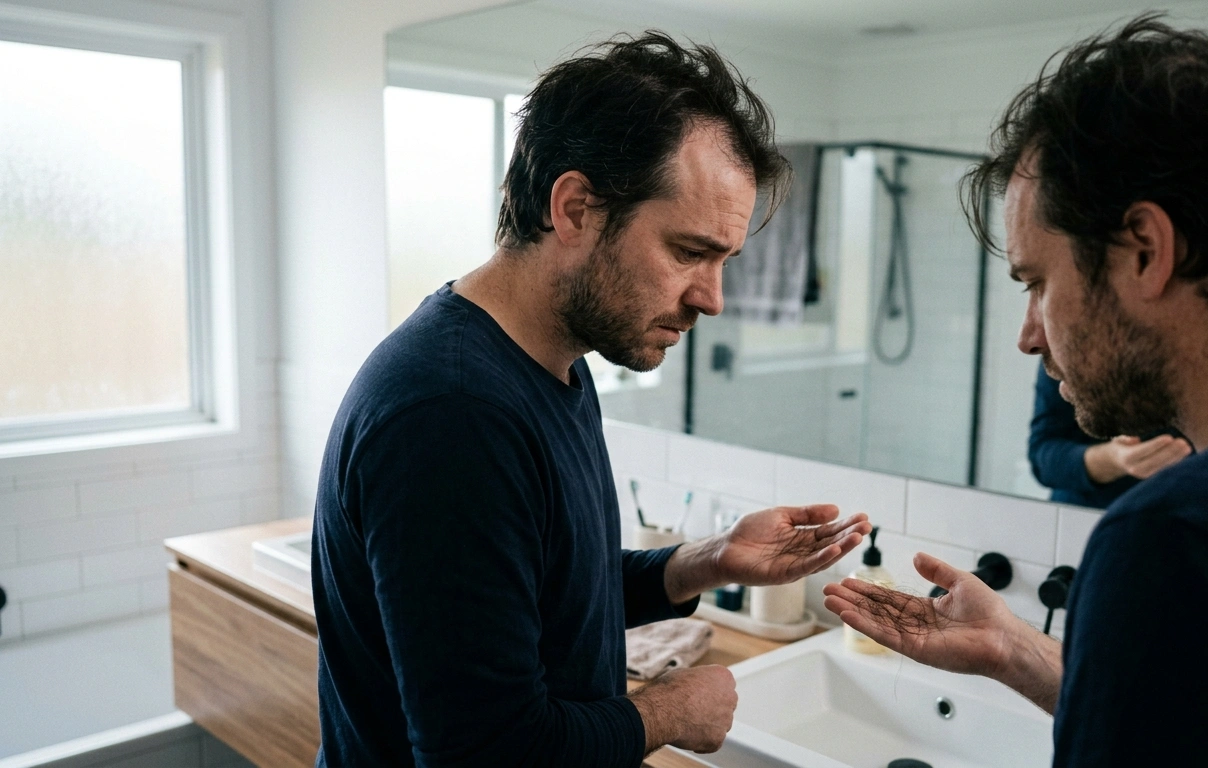
Hair fall due to stress is real, common, and in most cases, reversible. Chronic stress pushes hair follicles into a resting phase prematurely, causing them to shed weeks or months later in a condition called telogen effluvium.
You don’t notice it at first. Then one morning the pillow tells the story. Or the shower drain. Or the comb that’s picking up more than it used to. The frustrating part is the timing, the shedding happens 2 to 3 months after the stressful event, so by the time you’re losing hair, the stress that caused it might already be over. The body works on a delay.
The better news: stress-related hair loss is not the same as genetic balding. The follicles aren’t damaged. They’re paused. With the right approach, addressing the stress, feeding the scalp, supporting the system, most of it grows back. Here’s what that actually looks like.
How to Stop Hair Loss Due to Stress

Stopping hair fall due to stress requires working on two things simultaneously: the stress itself, and the nutritional environment your hair follicles need to recover and restart growth.
Neither alone is enough. Managing stress without feeding the follicles leaves them undernourished. Oiling the scalp every day while cortisol stays chronically high keeps pulling follicles back into the resting phase. Both need to move together.
What actually helps:
- Reduce cortisol at the source
Sleep is the biggest lever here. Most cortisol regulation happens during deep sleep. Less than 6 hours consistently keeps cortisol elevated, which directly prolongs the shedding phase. Fixing sleep is not a soft suggestion, it’s the most direct intervention for stress-related hair loss in men. - Ashwagandha daily
Clinically proven adaptogen that reduces cortisol measurably. Multiple studies confirm it lowers the hormone that’s pushing hair follicles into dormancy. Warm milk with ashwagandha at night is the traditional form. It works. - Scalp massage 5 minutes daily
Increases blood circulation to follicles, delivers nutrients, and reduces the scalp tension that stress physically causes. Done consistently, it shortens the recovery timeline. - Cut processed sugar and alcohol
Both spike inflammation, which worsens hair loss and cortisol connection in the body. They don’t cause the initial hair loss but they create an environment that makes it harder to recover from. - Exercise, especially moderate intensity
Lowers cortisol, improves blood flow, and supports hormonal balance. Men who exercise regularly during stressful periods tend to shed less than those who don’t. Not because the stress is lesser, because the body handles it better. - Zinc and iron intake
Deficiencies in both are extremely common in men with stress-related shedding. Pumpkin seeds, eggs, lean meat for zinc. Leafy greens, lentils, meat for iron. These aren’t optional additions, they’re the raw material follicles need to reenter the growth phase.
The shedding stops when the triggering stress and its biological effects are resolved. That takes time. But working the right levers shortens it.
Why Hair Fall Due to Stress Actually Happens
Understanding the mechanism makes the whole thing less frightening. And more fixable.
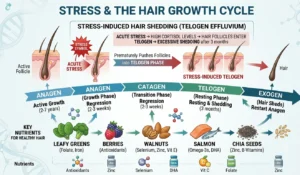
Hair grows in cycles, anagen (growth), catagen (transition), telogen (resting/shedding). Each follicle moves through this independently. Under normal conditions, only about 10% of follicles are in the telogen (resting) phase at any time, which is why normal daily hair loss, 50 to 100 strands, goes unnoticed.
Chronic stress changes this. When cortisol stays elevated for weeks, it disrupts the signalling that keeps follicles in the growth phase. A larger proportion get pushed prematurely into telogen, resting, not growing. Then two to three months later, when those follicles cycle out, they shed simultaneously.
That’s the mass shedding that alarms people. That’s telogen effluvium treatment territory.
The stress and hair growth cycle are biologically linked, the body under threat prioritises survival systems over hair growth. Hair is metabolically expensive. Under stress, the body decides it can wait.
This is why the shedding feels sudden but the cause was months earlier. And why addressing stress now means the hair you’re losing today was already decided last season. The work you do now shows up in your hair three months from now. That delay is hard to sit with. But understanding it removes the panic, and panic, ironically, adds more cortisol.
How to Stop Hairfall at Home
Most of what works for hair fall due to stress doesn’t require a dermatologist or expensive products. The home-based approach, done consistently, addresses both the scalp environment and the internal causes.
What to do regularly:
- Onion juice on the scalp
Contains sulphur, which supports keratin production and improves blood circulation to follicles. A study in the Journal of Dermatology found onion juice significantly outperformed placebo in regrowing hair. Apply, leave 30 minutes, wash off. Not glamorous, effective. - Bhringraj or neem oil scalp massage
Traditional Ayurvedic approach. Bhringraj specifically is known as kesh raj, king of hair. Massaging with warm oil nightly improves follicle circulation and reduces scalp inflammation. - Amla (Indian gooseberry)
Eaten or applied. One of the richest Vitamin C sources available, and Vitamin C is critical for collagen synthesis in the scalp. Regular amla intake supports how to reduce hairfall naturally from the inside. - Egg mask once a week
Protein, biotin, and sulphur directly applied to the scalp. Leaves hair stronger and feeds follicles topically between washes. - Switch to sulphate-free, mild shampoo
Harsh shampoos strip scalp oils and damage already fragile stressed hair. During a shedding phase, the scalp needs gentleness, not stripping. - Cold water rinse after washing
Closes the hair cuticle, reduces breakage, and improves shine. Simple, zero cost, genuinely helps during the vulnerable phase of regrowth. - Meditation or breathwork 10 minutes daily
Not as a spiritual practice necessarily. As a cortisol management tool. Ten minutes of slow breathing measurably reduces cortisol in the short term. Over weeks, it recalibrates the baseline. That is directly relevant to Ayurvedic remedies for hair fall, the internal calm that the tradition has always connected to external health.
These home approaches work because they address the scalp environment and the stress response together. Neither in isolation is as effective as both running at once.
Nutrition That Supports Recovery from Hair Fall Due to Stress
The follicle can only regrow hair if it has the raw materials. Stress depletes specific nutrients faster than normal, which is why men in high-stress periods often have multiple deficiencies driving the shedding simultaneously.
The nutrients that matter most:
- Biotin (Vitamin B7)
Central to keratin production. Found in eggs, almonds, sweet potato. Deficiency directly causes brittle hair and shedding. - Iron
Iron deficiency is one of the most common causes of hair loss in Indian men with high-stress lifestyles. Lentils, spinach, meat, dark chocolate. - Zinc
Supports follicle cell repair and protein synthesis. Pumpkin seeds, sesame, eggs. - Vitamin D
Follicle receptors require Vitamin D to function properly. Most urban Indian men are deficient. Morning sunlight, 20 minutes, is the most efficient fix. - Protein
Hair is almost entirely protein. Men eating low-protein diets during stress show worse shedding and slower regrowth than those maintaining protein intake.
Shilajit is worth mentioning here, not as a hair product, but because its fulvic acid content improves the absorption of these exact nutrients into cells. Nature Mania’s Shilajit Capsules are built around this mineral-dense, lab-tested resin that supports the whole system stress depletes, energy, hormones, nutrient absorption, which is the same system driving hair fall due to stress from the inside.
Conclusion
Hair fall due to stress is the body sending a delayed message about something that already happened. The follicles aren’t broken. They’re waiting for the environment to change.
Create that change, sleep properly, manage cortisol, feed the scalp and the system, give it time. Three months of consistent effort shows up differently than three days of panic-buying products.
Baal wapas aate hain, when the body gets what it needs. The work is less dramatic than the shedding suggests.
Support Stress Recovery with Nature Mania Shilajit Capsules
Chronic stress depletes the minerals and hormonal balance that healthy hair growth depends on. Nature Mania’s Shilajit Capsules, formulated with pure, lab-tested Shilajit resin, support cortisol regulation, nutrient absorption, and overall vitality naturally. AYUSH approved, no harsh chemicals. COD available.
Frequently Asked Questions
Q1: How can I prevent and treat hair loss from stress?
Treat the root cause, reduce chronic cortisol through sleep, exercise, and adaptogens like ashwagandha. Simultaneously support the scalp with oil massage, protein-rich diet, and zinc and iron intake. Recovery takes 3–6 months because one full hair growth cycle needs that time to complete.
Q2: Can I use minoxidil for stress hair loss?
Minoxidil can help stimulate regrowth but it addresses the scalp, not the cortisol driving the shedding. Used without managing stress, results are limited. If stress-related shedding is severe and prolonged, a dermatologist’s guidance is worth seeking before starting minoxidil, it’s not always necessary for telogen effluvium, which often resolves naturally.
Shedding typically peaks 2–3 months after the stressful period and gradually slows as the trigger is resolved. With active recovery, sleep, nutrition, cortisol management, most men see significant improvement within 3–6 months. Without addressing the cause, it can persist longer or recur with each stress cycle.
Yes, in most cases, fully. Telogen effluvium is not the same as genetic hair loss. The follicles are dormant, not destroyed. Once the stress is resolved and the body is properly nourished, follicles re-enter the growth phase. Patience is the hardest part, regrowth takes months, not weeks.
Q5: What vitamins help most with hair fall due to stress?
Biotin, iron, zinc, Vitamin D, and Vitamin C are the most directly relevant. Stress depletes all of these faster than normal. A blood test to identify actual deficiencies is more useful than taking everything, targeted supplementation based on what’s actually low works better than guessing.
Q6: Can Ayurvedic remedies genuinely help with stress hair loss?
Yes, ashwagandha reduces cortisol directly, which addresses the hormonal cause. Bhringraj oil improves scalp circulation. Amla provides Vitamin C for collagen synthesis. These aren’t alternatives to nutrition and sleep, they complement them. Ayurvedic remedies for hair fall work best as part of a complete approach, not as standalone solutions.